

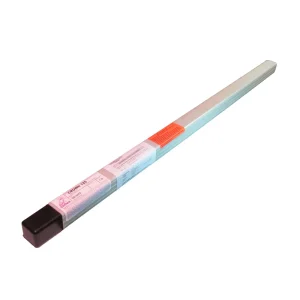
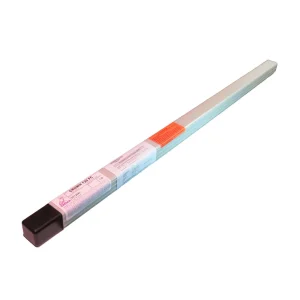
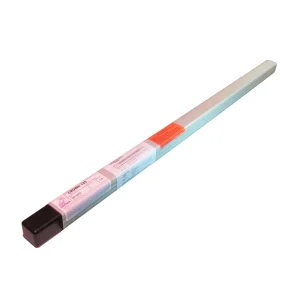
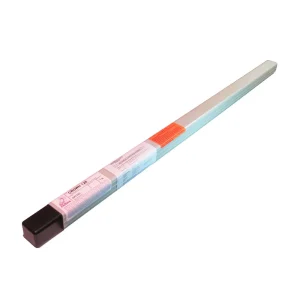
Brazing alloys join metals below their melting point, which lets dissimilar materials be joined without distorting the base metal.
Hardfacing alloys are grouped by the wear mechanism they resist. Austenitic manganese steels work-harden under impact and are used where parts are hammered; chromium carbide alloys resist low-stress abrasion from sand and slurry; tungsten carbide composites resist severe abrasion but are not for impact. Applying the wrong type is common — a hard, brittle deposit on an impact-loaded part will crack and spall.
Application method sets the dilution and the bond. Open-arc hardfacing with a stick electrode is the simplest; flux-cored hardfacing wire gives higher deposition and better consistency; oxy-fuel and TIG-applied alloys give lower dilution for thin deposits.
Brazing alloys — silicon bronze, aluminium bronze, nickel silver, phosphor copper — flow at lower temperature than the base metal and join by capillary action. They are used for dissimilar metal joints, for thin sheet where welding would distort or burn through, and for repair work. Flux selection is critical: the wrong flux will not remove the oxides that stop the filler from wetting.