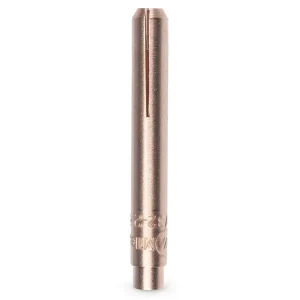
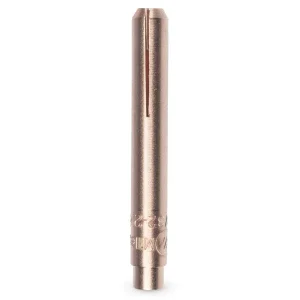
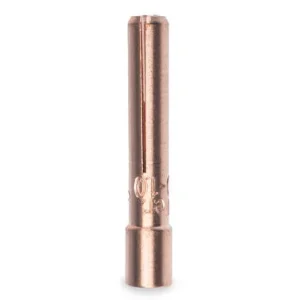
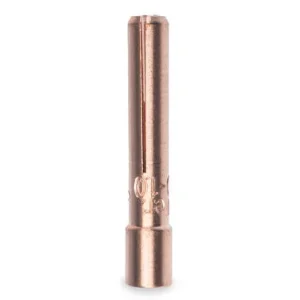
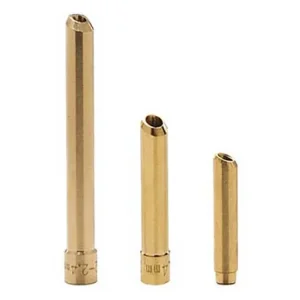
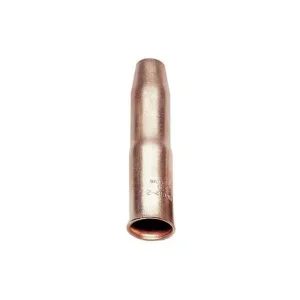
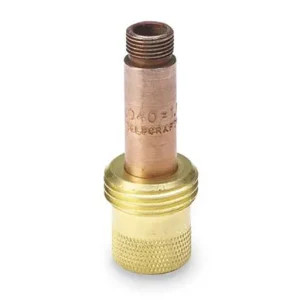
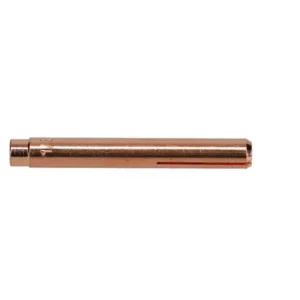
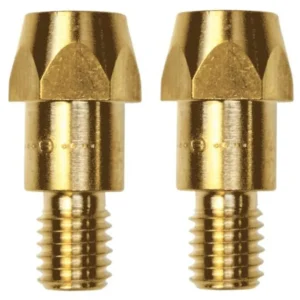
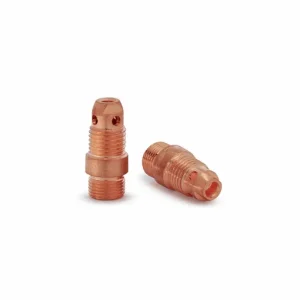
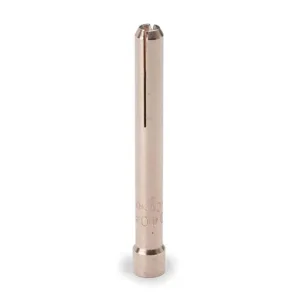
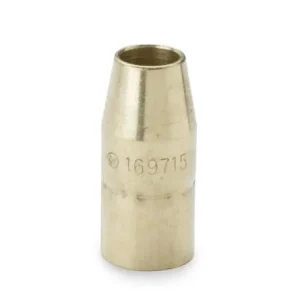
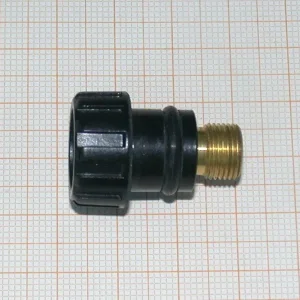
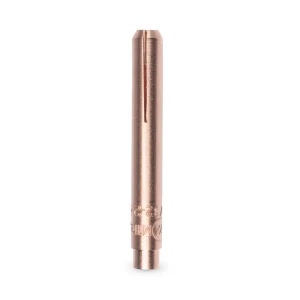
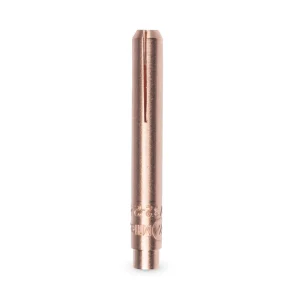
Consumables are the parts that wear out. Contact tips, nozzles, liners, drive rolls, collets, gas lenses, plasma electrodes and shields all have a finite life, and running them past that point damages the torch and ruins weld quality long before it stops working outright.
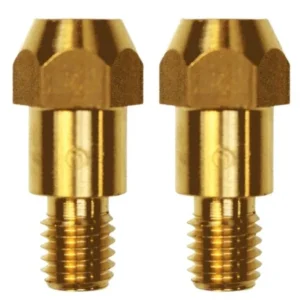
Contact tips are the highest-turnover item in any MIG operation. They carry the welding current into the wire, and the bore wears oversize with use. An oval bore produces an unstable arc, spatter and poor bead shape. Tip bore must match wire diameter exactly — running .045 wire through a .035 tip causes wire stubbing and feeding problems. Tips are sold in multi-packs because a production shop will go through them weekly.
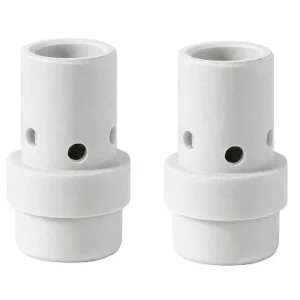
Nozzles control shielding gas coverage. A nozzle that is spattered shut, dented or the wrong size for the joint will pull in air and produce porosity. Recessed nozzles sit further back for better visibility in tight joints; tapered nozzles get into corners. Both are consumable and both need replacing when the spatter build-up stops cleaning off.
Liners guide the wire from the feeder to the gun. A worn or kinked liner causes wire chatter, inconsistent feed and bird-nesting at the drive rolls. The liner must match wire type — steel wire uses steel liners, aluminium needs nylon or teflon to reduce friction. Replacing a liner is a five-minute job that fixes problems people often blame on the feeder.
Plasma consumables are more sensitive than MIG parts. The electrode and nozzle in a plasma torch erode with each start, and a worn set changes cut quality, kerf width and dross before it fails. Cutting at the wrong amperage or with the wrong shield for the material accelerates that wear sharply. Keeping a spare set on hand is standard practice on any plasma table.
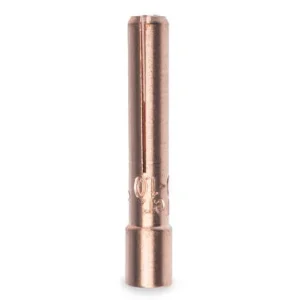
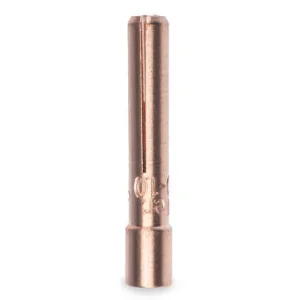
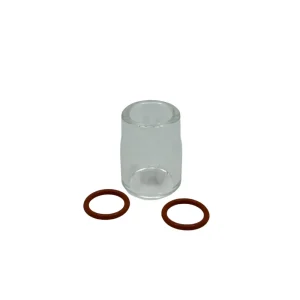
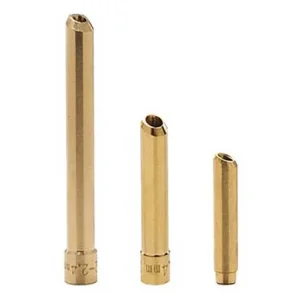
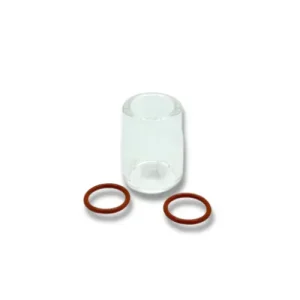
Drive rolls, collets, gas lenses and back caps are the same story at lower turnover. All the parts in this category are listed by the torch or gun series they fit, so check the model number before ordering — the same tip shape is often made in several thread sizes.