Propylene is a colorless fuel gas with a naturally pungent smell. It is similar to propane, but has a double bond which gives it a combustion advantage. Propylene is extremely flammable and non-toxic. Propylene is a favorable alternative to propane for heating and cutting because of its superior combustion performance. Propylene is most commonly used for flame cutting, HVOF thermal spray and brazing.
Features
- Colorless, flammable, liquefied gas with a faintly sweet odor
- Non-toxic (but may cause dizziness in high concentrations)
- Widely used in the chemical and plastics industries
- Heavier than air so will collect in ducts, drains and low-lying levels, forming an explosion hazard
- Will ignite and burn instantly from a spark or piece of hot metal
- Propylene produces high heat combustions and flame temperatures.
Specifications
Cylinder
- Connection Valve (CGA) : CGA 510
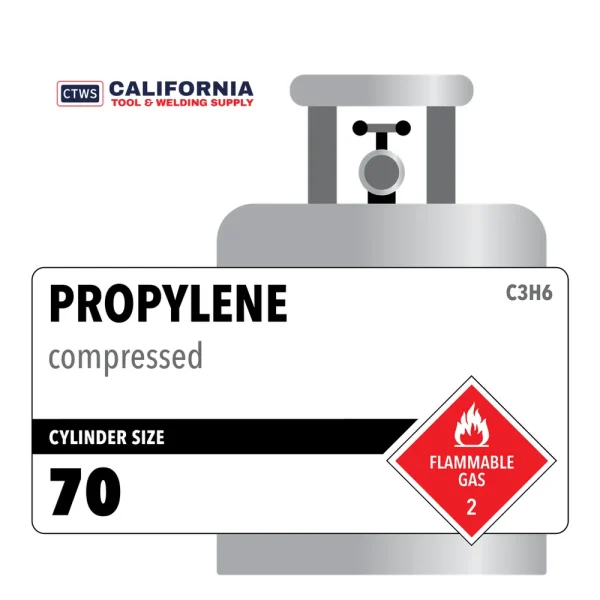
- Cylinder Size : 70
- Cylinder Volume (lbs, l, or ft3) : 70 lbs
- Cylinder Material : Varied
Technical
- Gas : Propylene
- Symbol : C3H6
- Chemical Symbol : C3H6
- Gas Grade : Industrial
- Molecular Mass : 42.08 g/mol
- Specific Volume : 8.88 ft3/lb (0.554 m3/kg)
- CAS Number : 115-07-1
Shipping
- Shipping Name : Propylene, Compressed
- Hazard Class : 2.1
- UN Number : 1077
- Label : Flammable Gas
Safety
- Physical state : Gas
- Appearance : Colorless gas
- Color : Colorless
- Odor : Stenchant often added. Sweetish
- Odor threshold : Odor threshold is subjective and inadequate to warn for overexposure
- Freezing point : -185.25 °C (-301.45°F)
- Boiling point : -47.7 °C (-53.9°F)
- Flash point : -107.8 °C (-162°F)
- Critical temperature : 91.8 °C (197.24°F)
- Auto-ignition temperature : 455 °C (851°F)
- Flammability (solid, gas) : 2 – 11.1
- Vapor pressure : 10.2 bar (132.81 psig) @70°F (21.1 °C), 1 ATM
- Relative vapor density at 20 °C : 0.6
- Density : 0.5139 g/cm_ (at 20 °C)
- Relative gas density : 1.5
- Solubility : Water: 384 mg/l
- Log Pow : 1.77
- Oxidizing properties : None