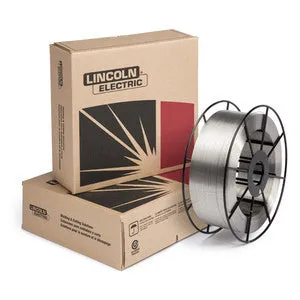
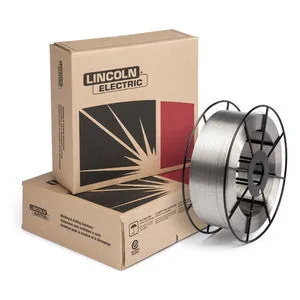
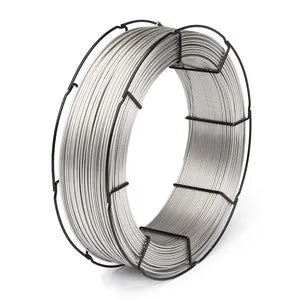
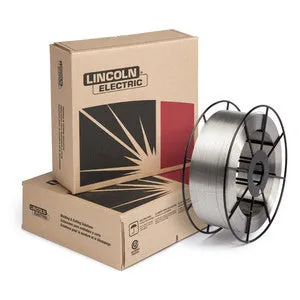
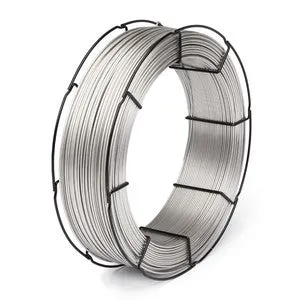
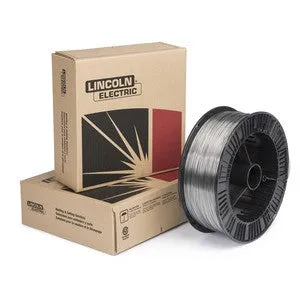
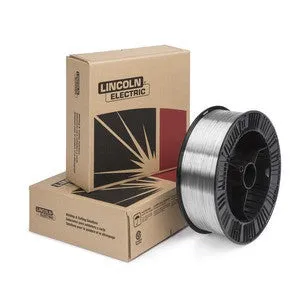
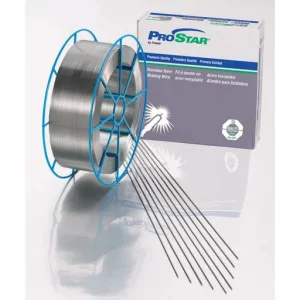
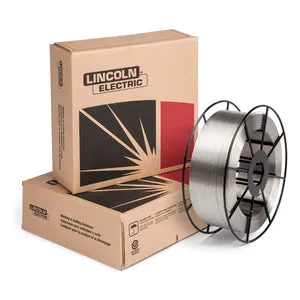
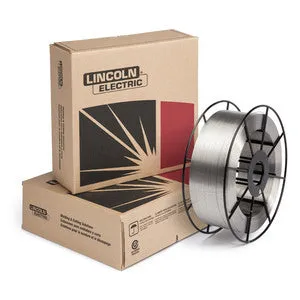
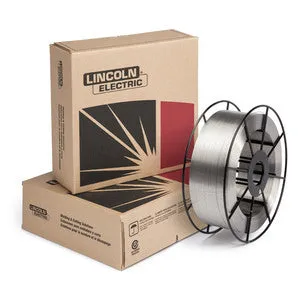
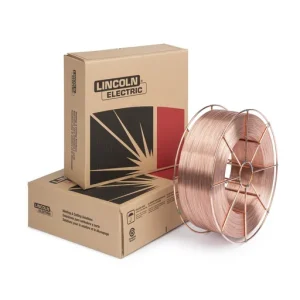
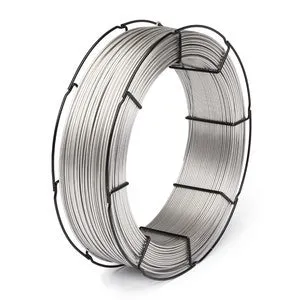
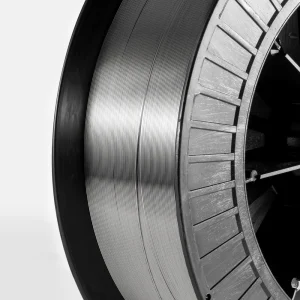
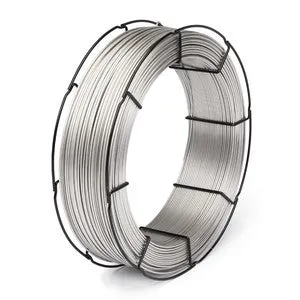
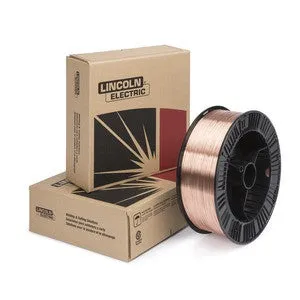
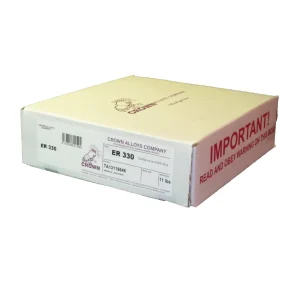
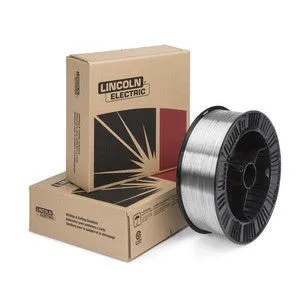
MIG wire is a solid wire fed continuously through the gun, with shielding gas supplied separately. The wire becomes the filler and carries the current, so its diameter and surface condition both affect how the arc behaves.
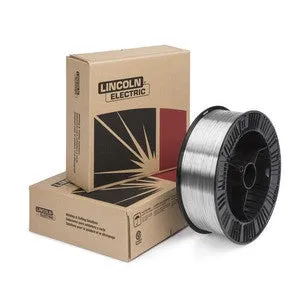
ER70S-6 is the general-purpose mild steel wire, with higher silicon and manganese than ER70S-3 for better wetting and tolerance of mill scale. ER70S-3 is used where cleaner, lower-silicon deposits are wanted. Stainless wires follow the alloy numbering: ER308L for 304, ER316L for 316, ER309L for dissimilar joints. Aluminium uses ER4043, which flows well on castings and thin sections, or ER5356, which gives higher strength and better anodising response.
Wire diameter sets the usable amperage range and the deposition rate. .023 and .030 in are for thin sheet and low heat input; .035 in is the general-purpose size; .045 in and above are for heavier plate and higher deposition. Running wire outside its intended range causes feeding problems, spatter and poor fusion.
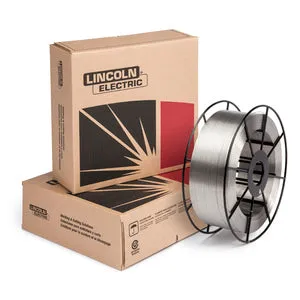
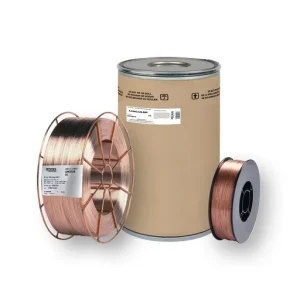
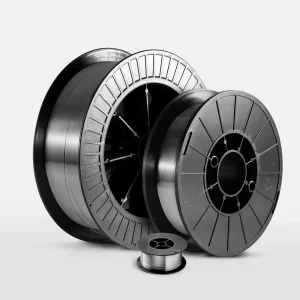
Spool size determines how often work stops for a change. 2 lb spools suit occasional use and portable work; 10, 33 and 44 lb spools are the production standard. Wire must be stored dry — moisture on the wire surface introduces hydrogen into the weld.