For anything beyond one-off work, they are the single biggest productivity and quality improvement available.
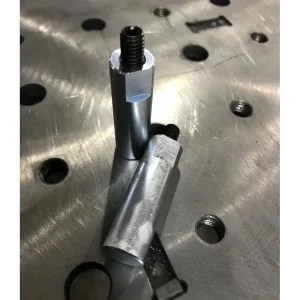
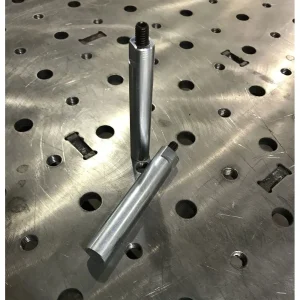
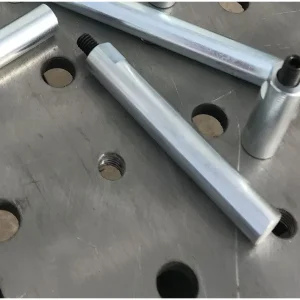
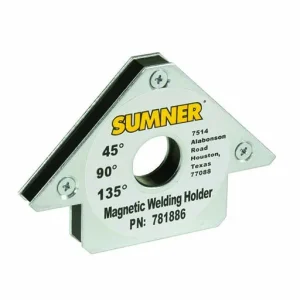
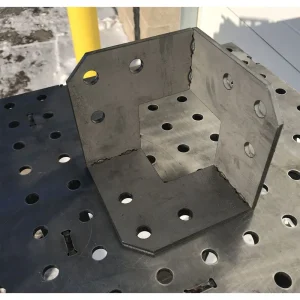
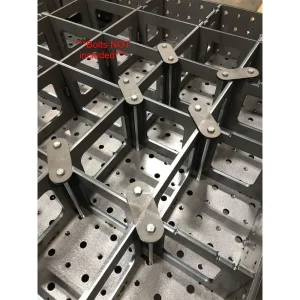
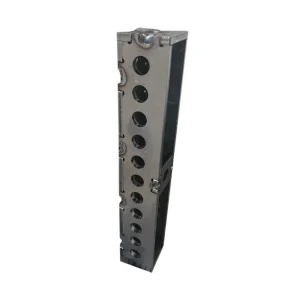
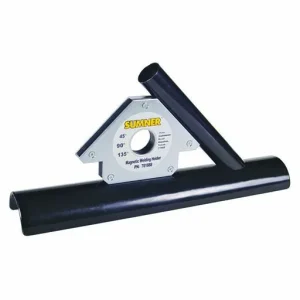
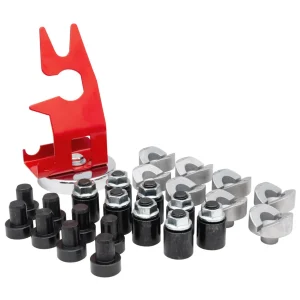
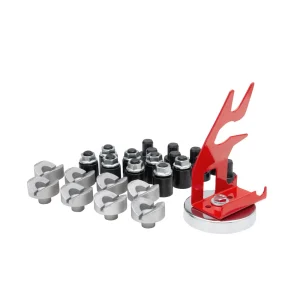
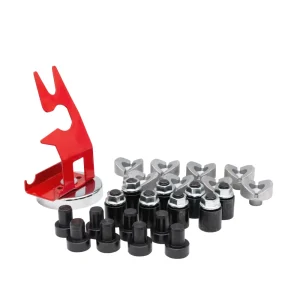
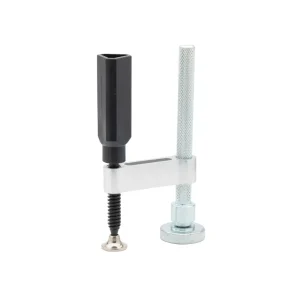
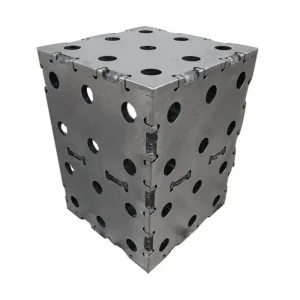
Fixturing tables have a pattern of precision holes (typically 28 mm or 16 mm on a 100 mm or 2 in grid) that accept clamps, stops, squares and hold-downs. The work is clamped in place rather than tacked, which eliminates the tack marks that have to be ground off afterwards and holds dimensions far more accurately than free-hand work.
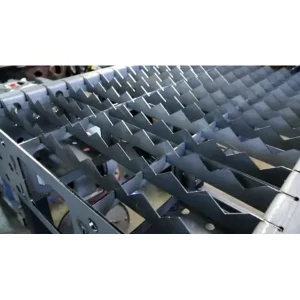
Table construction determines flatness and durability. Steel tables with a thick top resist distortion from welding heat; cast iron tables are more stable but heavier and more expensive. Nitrided or coated surfaces resist spatter. The table must be flat to a stated tolerance for fixturing to be meaningful — a table that is not flat makes every assembly slightly wrong.
Positioners rotate the work so it can be welded in the flat position, which is faster and produces better welds than vertical or overhead work. Positioners are rated by load capacity and by the torque they can hold at the offset the work creates.
Fixtures and jigs for specific parts are the next step up — purpose-built frames that hold a repeated assembly in exactly the right relationship. They pay back on any part made in quantity.