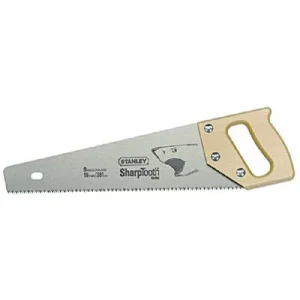
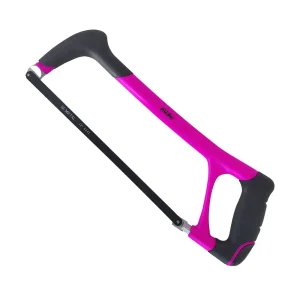
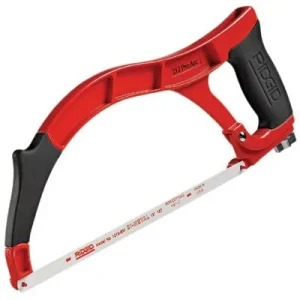
A hacksaw frame holds a thin blade under tension. Blade length (10 or 12 in) and tension determine whether the cut runs straight. A loose blade wanders; an over-tightened blade breaks. The frame type (fixed, adjustable, pistol grip) affects the reach and the force that can be applied.
Blade pitch (teeth per inch) must suit the material thickness. Coarse blades (14-18 TPI) for thick sections where chips are large; fine blades (24-32 TPI) for thin wall tube, pipe and sheet, where coarse teeth catch and strip. The rule of thumb is at least three teeth in contact with the material.
Cutting technique matters as much as the tool. Long, steady strokes using the full blade length, with light pressure on the forward stroke and none on the return, cut faster and keep the blade straight. Too much pressure work-hardens the material and dulls the blade.