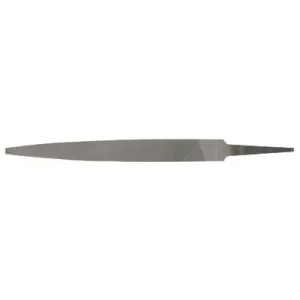
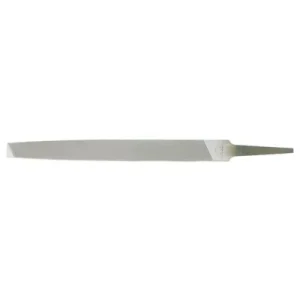
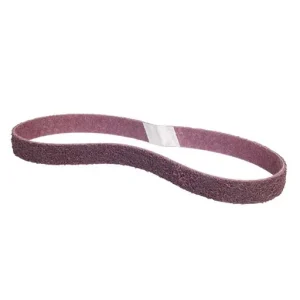
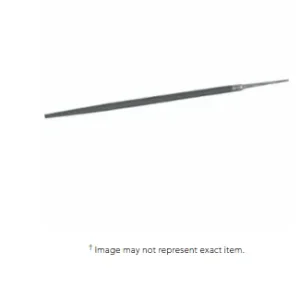
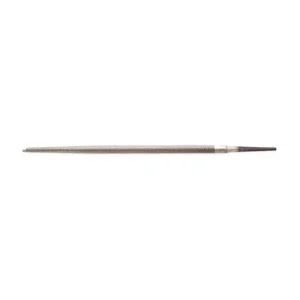
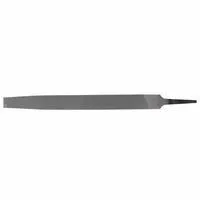
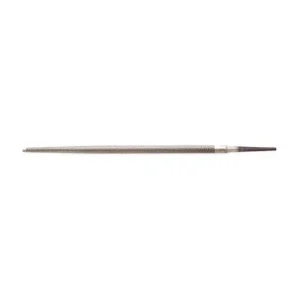
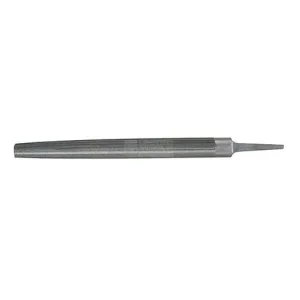
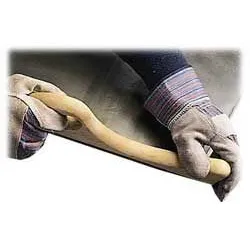
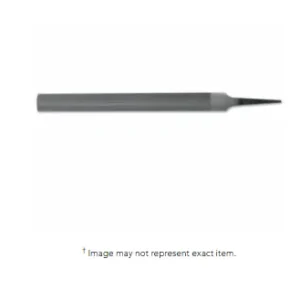
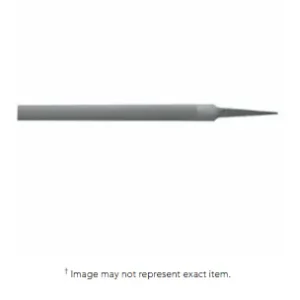
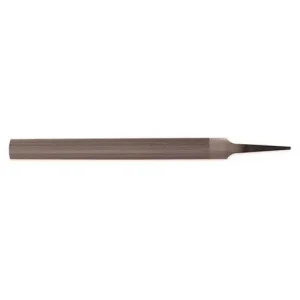
Files and rasps shape and finish metal by removing small amounts of material with each stroke. They are used for deburring, fitting, blending and for final shaping where a grinder would remove too much.
Cut type determines the finish and the removal rate. Single-cut files have one set of parallel teeth and produce a smooth finish — used for sharpening and fine work. Double-cut files have two crossing sets of teeth and cut faster with a coarser finish. Rasps have individual raised teeth rather than cut grooves and remove material very fast on wood, soft metal and body filler.
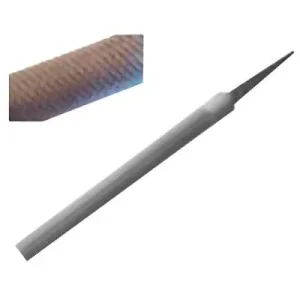
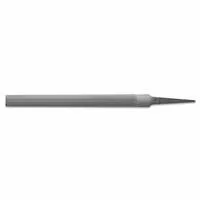
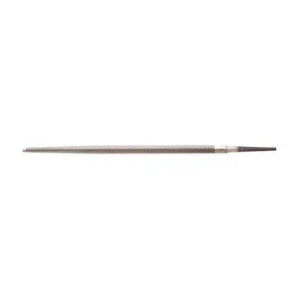
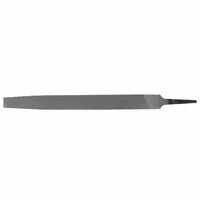
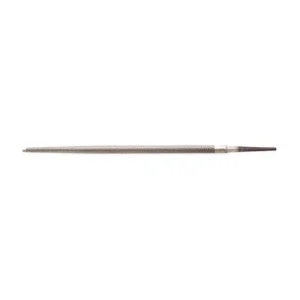
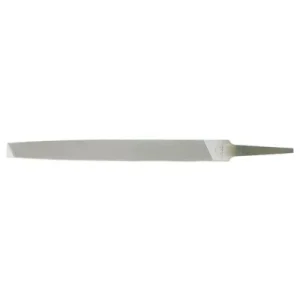
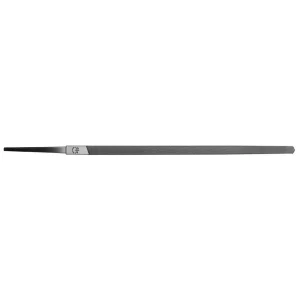
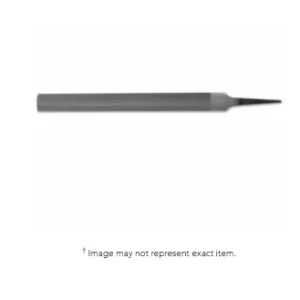
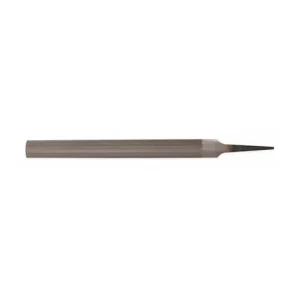
Shape follows the work. Flat files for flat surfaces, half-round for concave curves, round for holes, triangular for corners, square for slots, and pillar files for narrow work. Needle files are the small versions used for precision fitting and die work.
File care matters more than most people realise. Files cut in one direction only — dragging back dulls the teeth. Chalk or file carding keeps the teeth clear of pinning, which is what happens when soft metal clogs the grooves. A dull file skids instead of cutting and is not worth keeping.