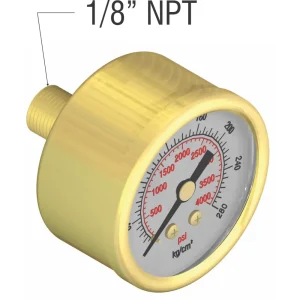
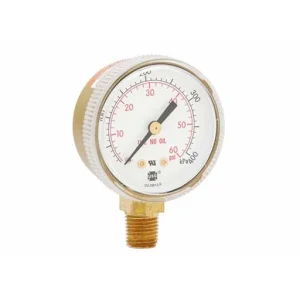
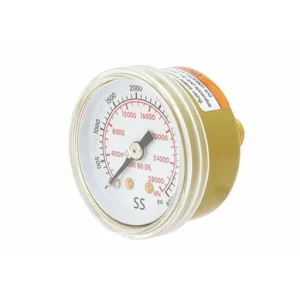
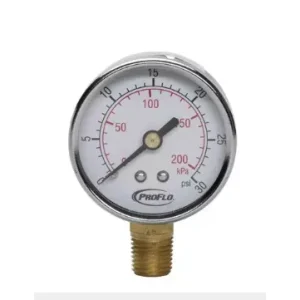
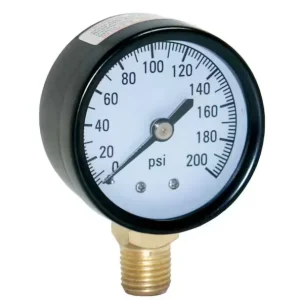
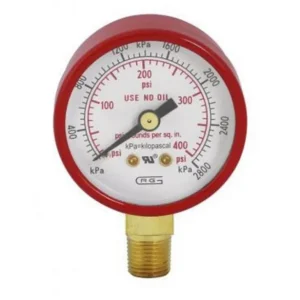
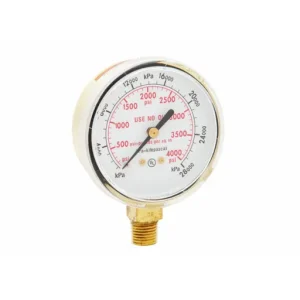
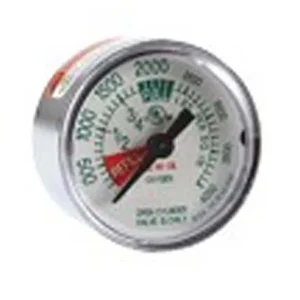
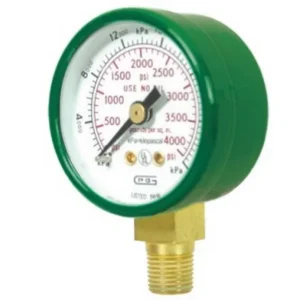
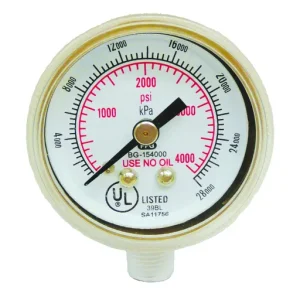
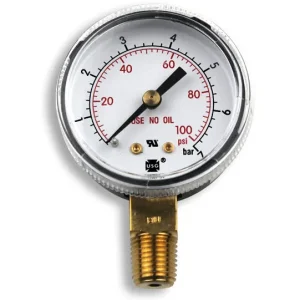
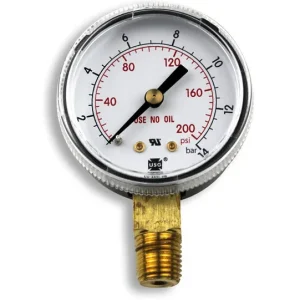
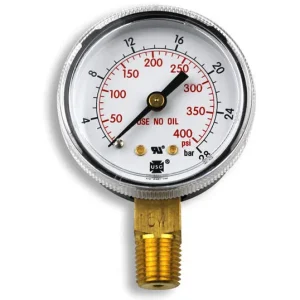
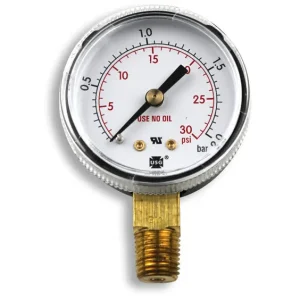
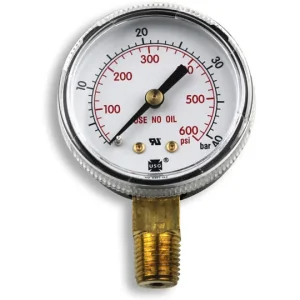
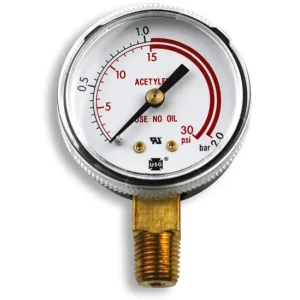
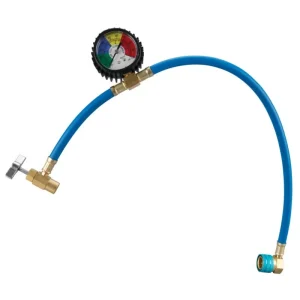
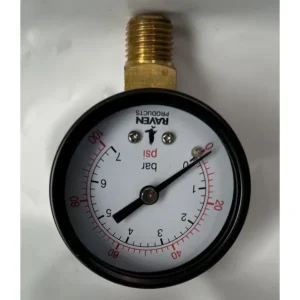
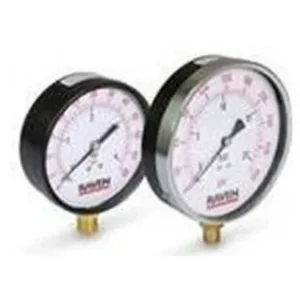
Pressure gauges show cylinder contents and delivery pressure. Regulators have them built in; stand-alone gauges are used for checking line pressure, for cylinder content on regulated manifolds, and for diagnostic work.
Gauge type must match the gas. Oxygen gauges must be oxygen-clean and are marked as such — using an oil-contaminated gauge on oxygen is a fire hazard. Acetylene gauges are rated to lower pressures than oxygen gauges and must never be used above their rating.
Gauge size affects readability and durability. A 2 in gauge is compact and adequate for a regulator; a 2.5 or 3 in gauge is easier to read at a distance and is common on manifold panels. Liquid-filled gauges resist vibration and pressure pulsation and are used where the gauge would otherwise fail from fatigue.
Accuracy class and scale range matter as much as size. A gauge with a 0-4,000 psi scale cannot be read accurately at 20 psi — the needle sits near zero and small errors are large in percentage terms. Matching the scale to the working pressure gives usable readings.