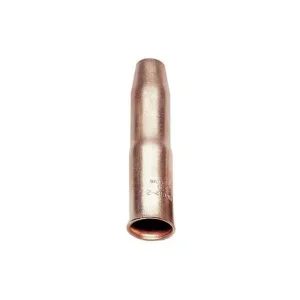
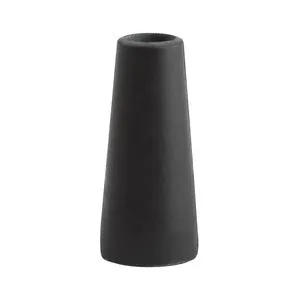
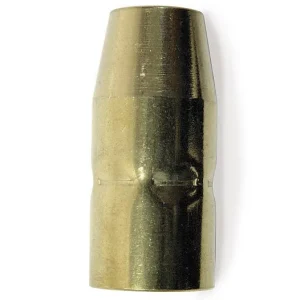

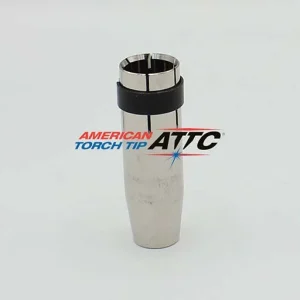
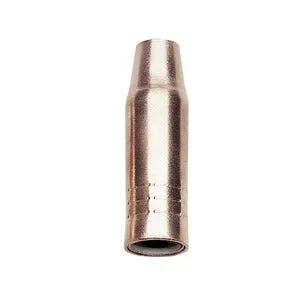


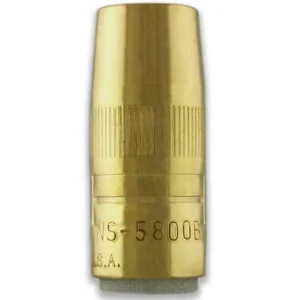
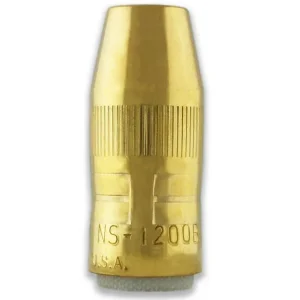
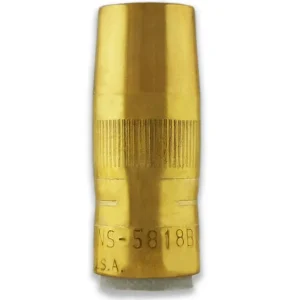

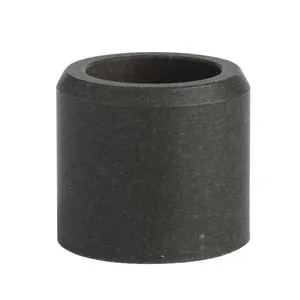
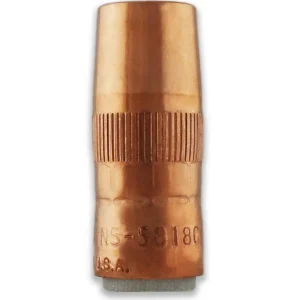
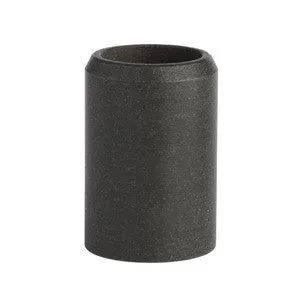
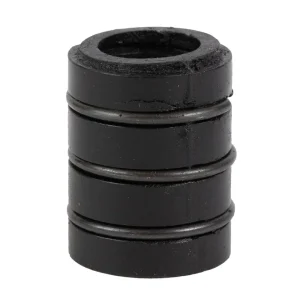
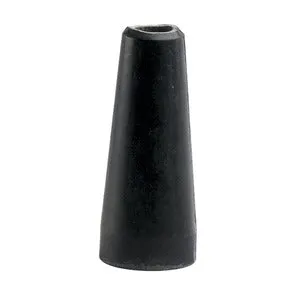
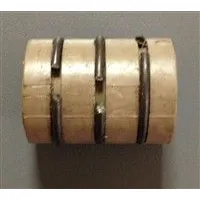
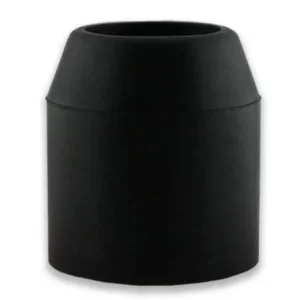
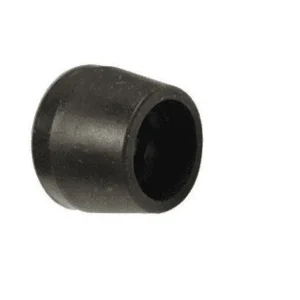
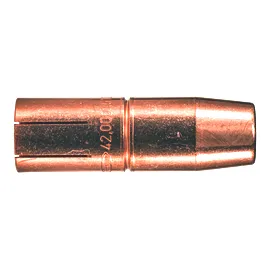
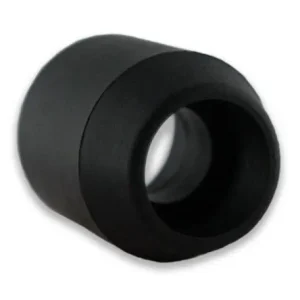
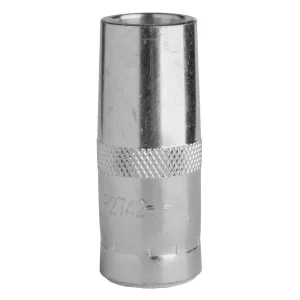
Its size, shape and condition decide whether the gas actually covers the weld, and a nozzle that is spattered shut or the wrong size for the joint will produce porosity no matter how well the machine is set.
Nozzle bore determines gas coverage and access. A larger bore covers more area and tolerates more stick-out; a smaller bore gets into tighter joints but can be knocked out of position more easily. For most general MIG work a 5/8 in bore is standard; heavier work uses 3/4 in; tight joints call for a tapered or narrow nozzle.
Recessed and flush nozzles set how far the contact tip sits inside the nozzle. A recessed tip is protected from spatter and gives better gas coverage but reduces visibility; a flush or slightly protruding tip gives better visibility but is exposed to spatter. Tapered nozzles angle inward to reach into corners and fillets.
Spatter build-up inside the nozzle is the most common cause of poor gas coverage. Once the bore is partly blocked, the gas flow becomes turbulent and pulls air into the weld. Anti-spatter spray slows the build-up; cleaning the nozzle regularly and replacing it when the spatter cannot be removed is the practical routine.
Nozzles are matched to the gun series and to the tip style. The same nozzle shape is made in different thread sizes and lengths for Tweco, Lincoln, Miller, Bernard and Binzel guns, so the gun model matters as much as the nozzle dimensions.