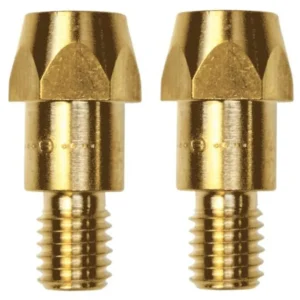
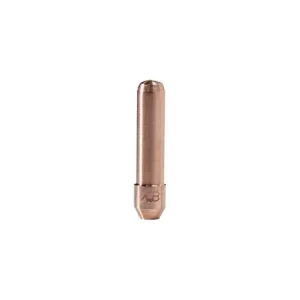
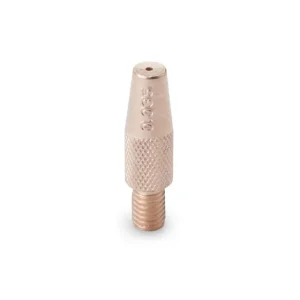
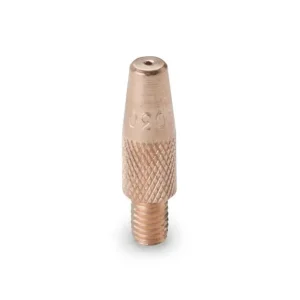
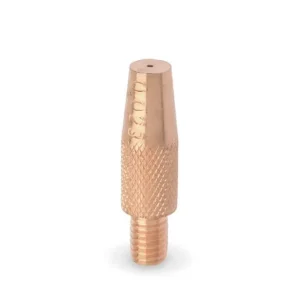
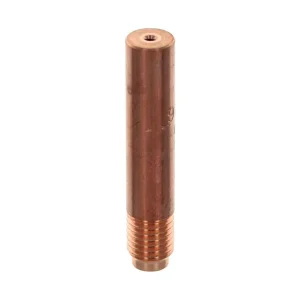
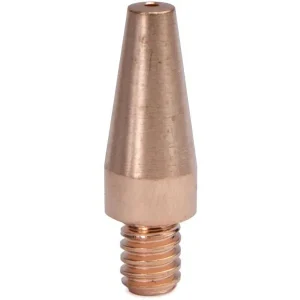
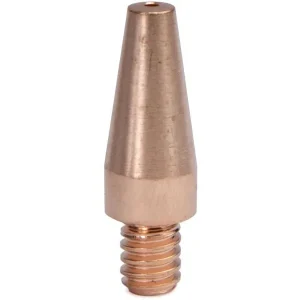
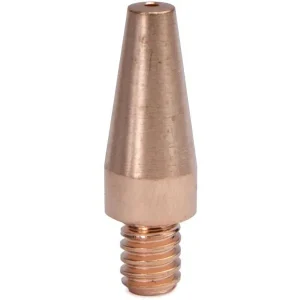
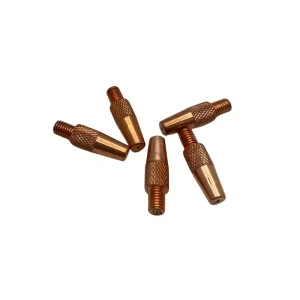
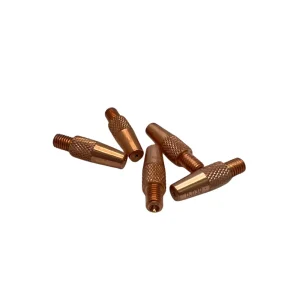
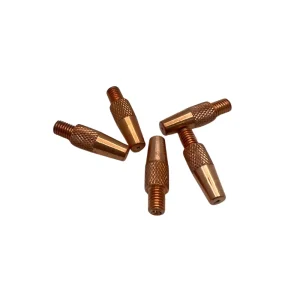
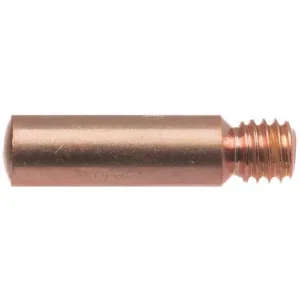
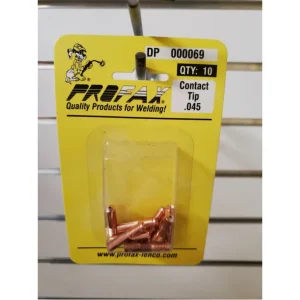
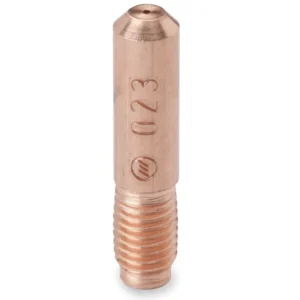

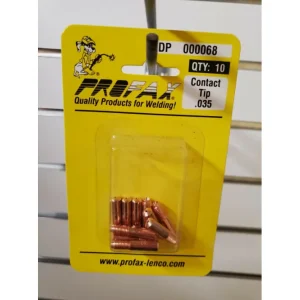
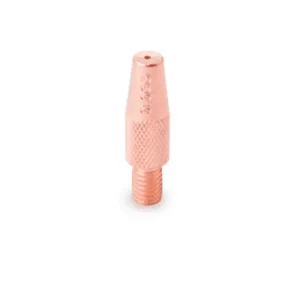
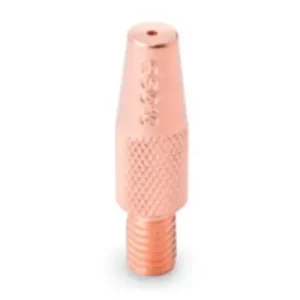
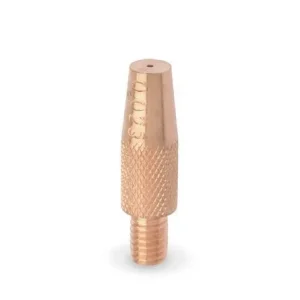
It sits at the end of the gun, the wire runs through its bore, and the arc starts where the wire leaves the tip.
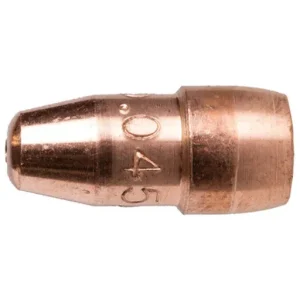
Bore size must match wire diameter exactly. Running .045 in wire through a .035 in tip causes the wire to stub against the tip, which produces inconsistent feed and eventually damages the liner and drive rolls. Running .035 wire through a .045 tip gives poor electrical contact, an unstable arc and spatter. The tip bore is usually stamped on the tip or specified in the product listing.
Tip geometry affects the arc and the access. Standard tips have a recessed wire exit; tapered tips let the welder see the joint better and get into corners; heavy-duty and severe-duty tips have thicker walls for higher amperage and longer life. Contact tip adapters let one gun run different tip styles.
Wear shows up as an oval bore, a spattered tip face, or a tip that has been arc-burned by the wire stubbing. A worn tip produces a wandering arc, poor bead shape and excess spatter — symptoms people often blame on the machine or the gas. Tips are sold in multi-packs because a production shop goes through them quickly.
Tips must be matched to the gun series. The same tip shape is made in several thread sizes and lengths across Tweco, Lincoln, Miller, Bernard and Binzel patterns, and a tip from the wrong series will either not thread or will seat at the wrong depth.