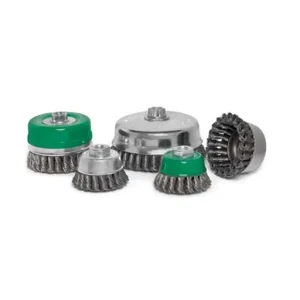
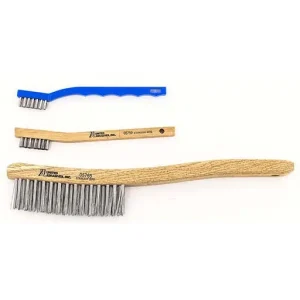
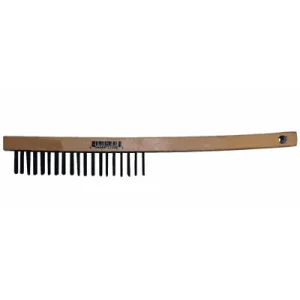
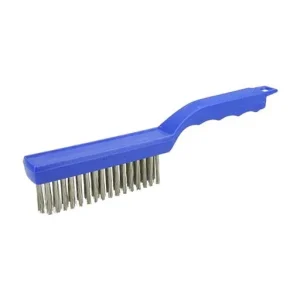
Wire brushes clean without removing base metal, which is what makes them the right tool for scale, rust, paint, slag and spatter removal where grinding would remove material you want to keep.
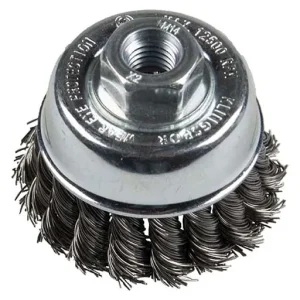
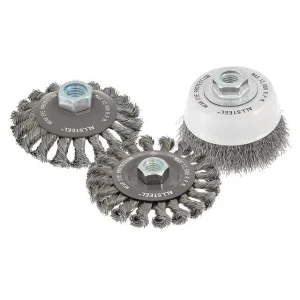
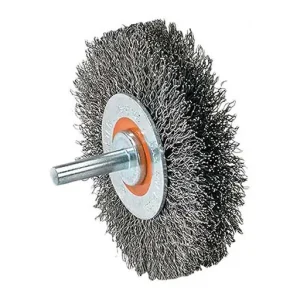
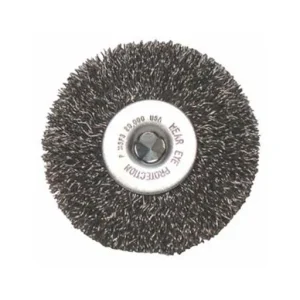
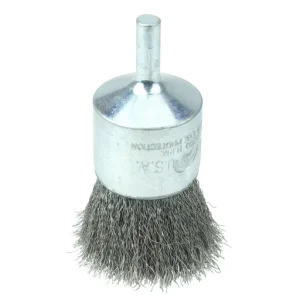
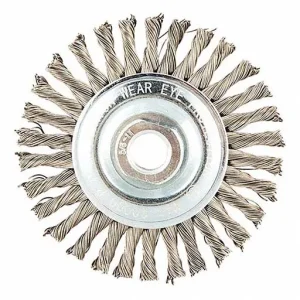
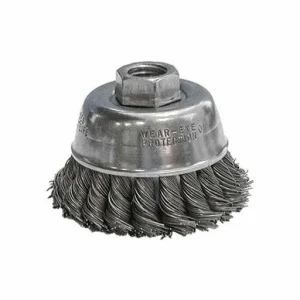
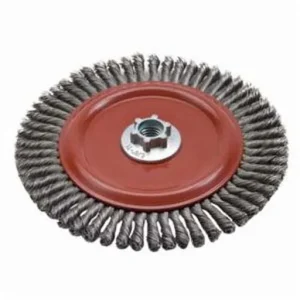
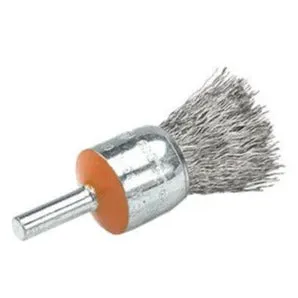
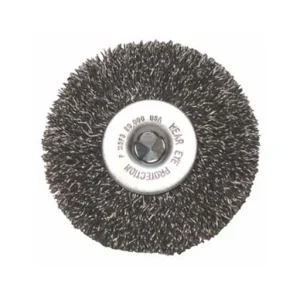
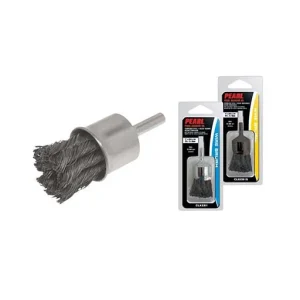
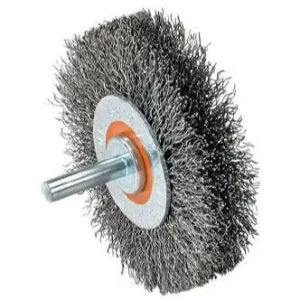
Knot wire is twisted into tight knots and is the aggressive option — used for heavy scale, rust and concrete removal, and for cleaning weld joints on dirty steel. Crimped wire has wavy filaments and is softer — used for light cleaning, deburring, edge blending and surface preparation before painting. Choosing knot wire where crimped is needed leaves deep scratches; choosing crimped where knot is needed does nothing.
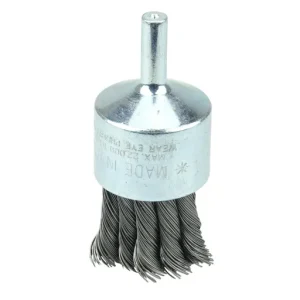
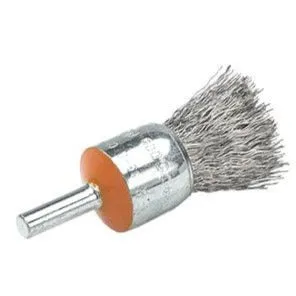
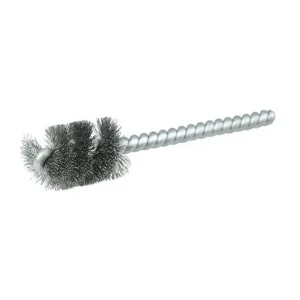
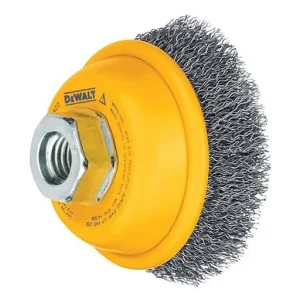
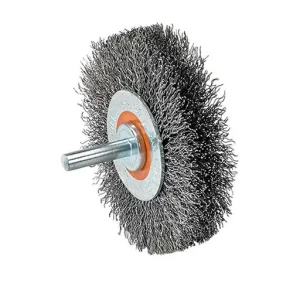
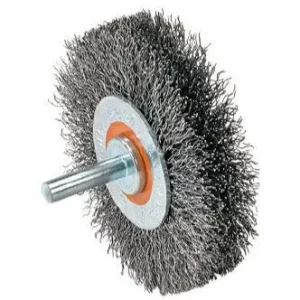
Brush shape follows the surface. Cup brushes are for flat surfaces and edges; wheel brushes are for reaching into corners and for narrow passes; end brushes are for holes, slots and inside diameters; tube brushes clean the inside of pipe and tube.
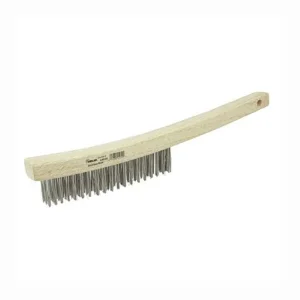
Wire material matters for contamination. Carbon steel wire is standard for general work. Stainless wire brushes must be used on stainless steel — a carbon steel brush leaves iron particles embedded in the surface, which rust and cause corrosion. Brass and bronze brushes are for non-ferrous and for spark-free work.