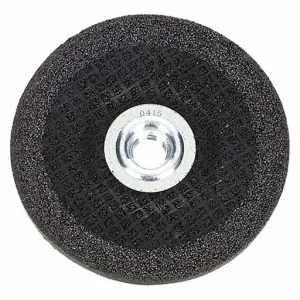
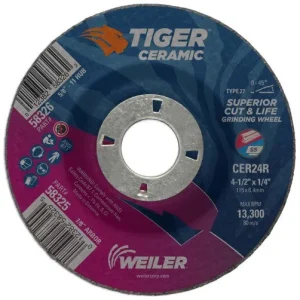
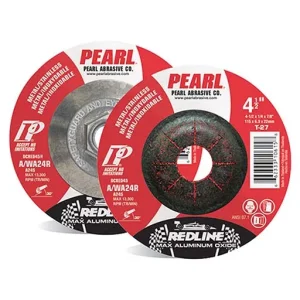
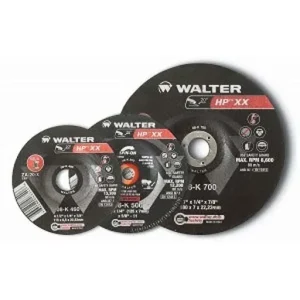
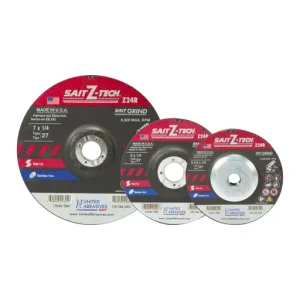
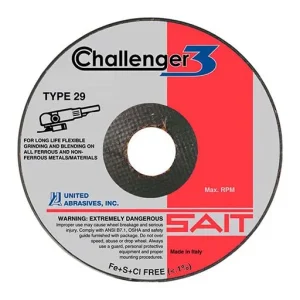
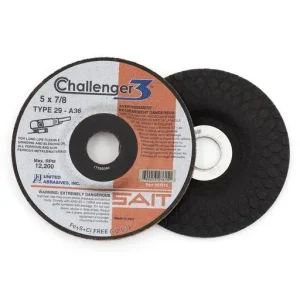
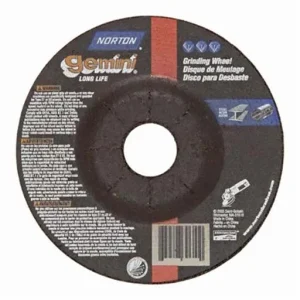
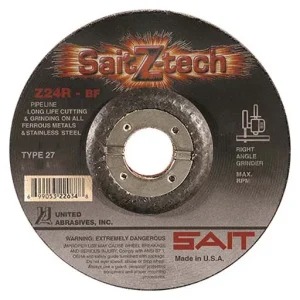
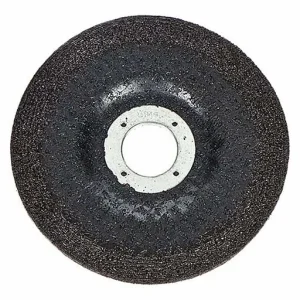
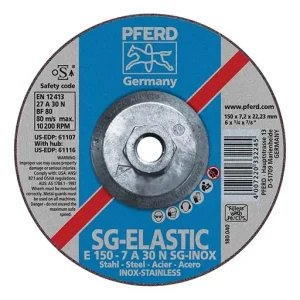
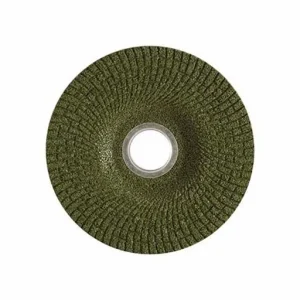
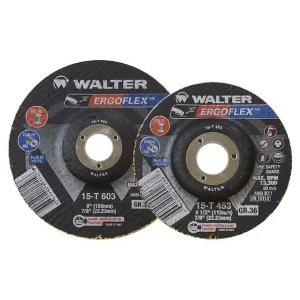
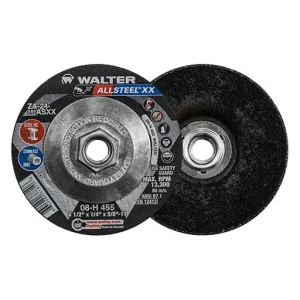
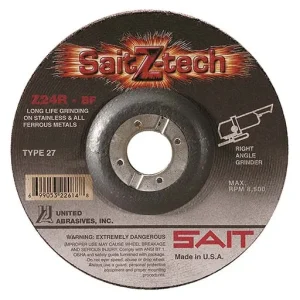
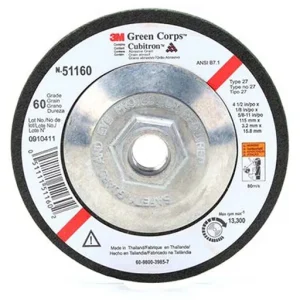
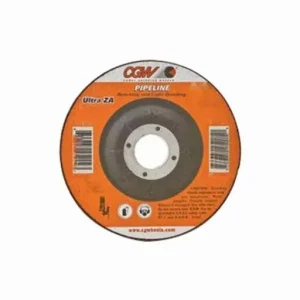
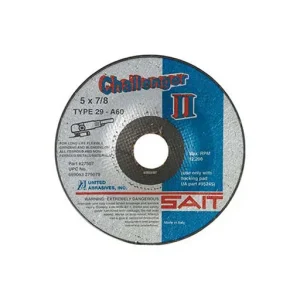
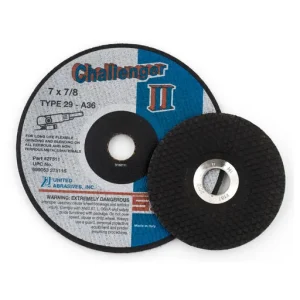
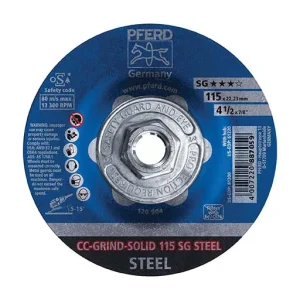
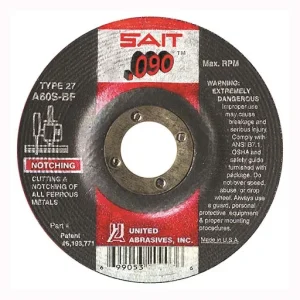
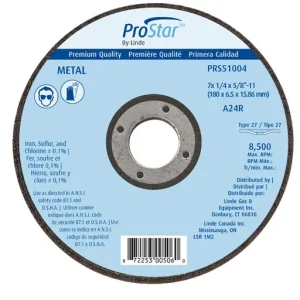
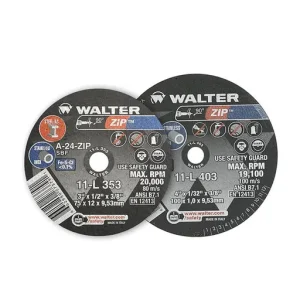
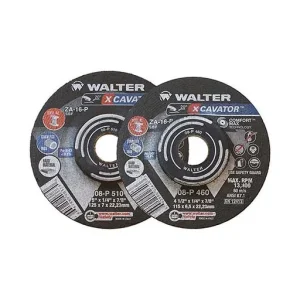
Grinding wheels are rigid bonded abrasives that remove metal fast and leave a controlled surface. They are specified by type number, abrasive, grit, grade and maximum operating speed, and using the wrong one is both ineffective and dangerous.
Type 27 depressed-centre wheels are the general-purpose choice for angle grinders and are used for stock removal, weld dressing and edge beveling. Type 1 straight wheels are for cut-off work only and must never be used for side grinding. Type 11 cup wheels are for bench and pedestal grinders.
Maximum RPM is a hard limit. A wheel rated to 8,500 RPM mounted on a 12,000 RPM grinder can burst. The rating is marked on the wheel or the blotter, and it must be at least the grinder's no-load speed. Wheel diameter must also match the grinder guard — a 7 in wheel on a 4.5 in grinder will not be covered by the guard.
Grain and grade control the cut. Zirconia and ceramic grains cut faster and cooler on steel and stainless; aluminium oxide is for general use and tool steel. Harder grades (H-K) hold shape better for hard materials; softer grades (J-L) shed grain faster and cut cooler on soft or heat-sensitive work. Grit 24-36 for heavy stock removal, 46-60 for general work, 80+ for finishing.