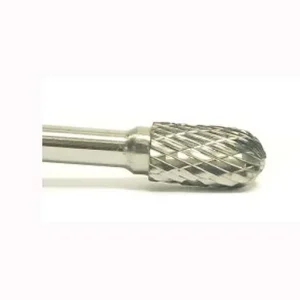
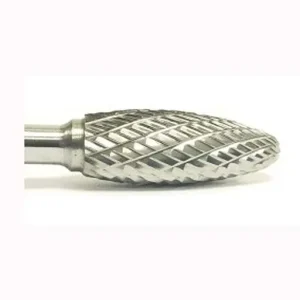
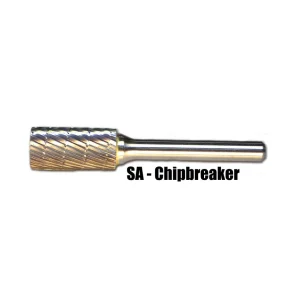
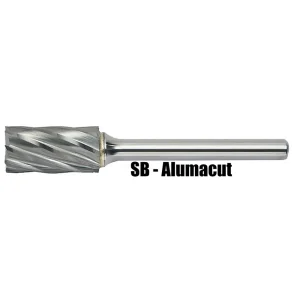
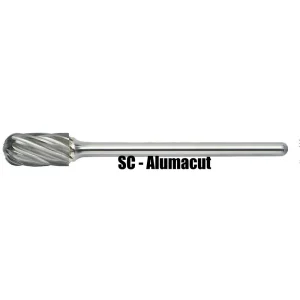
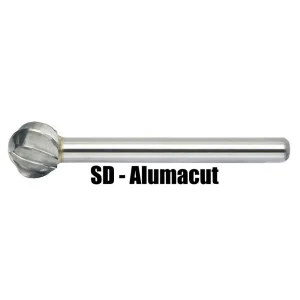
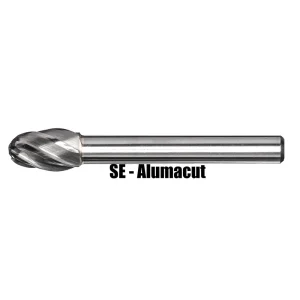
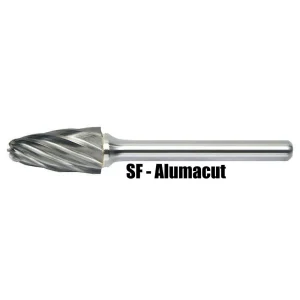
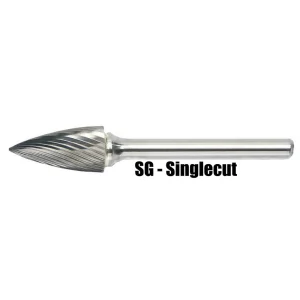
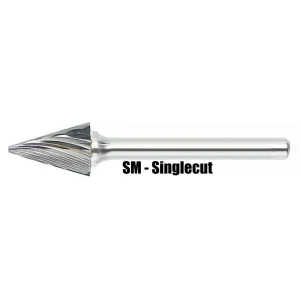
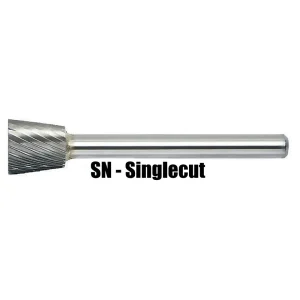
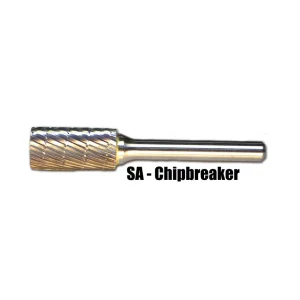
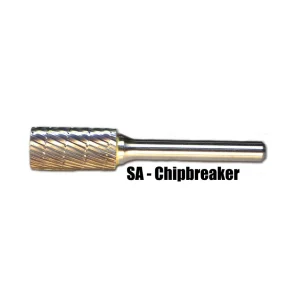
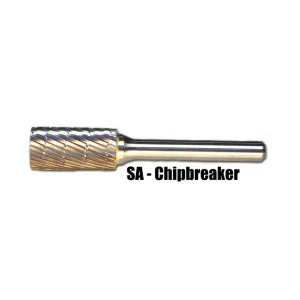
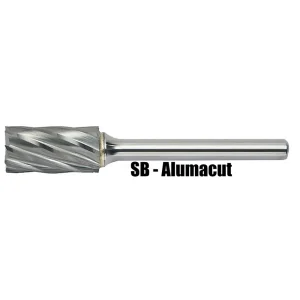
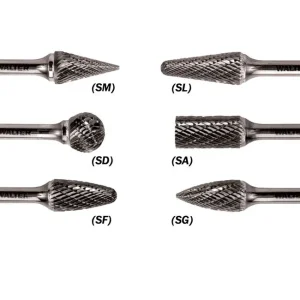
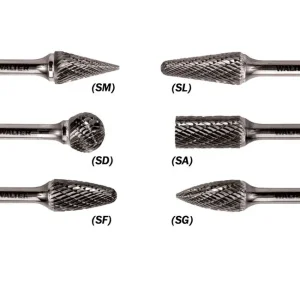
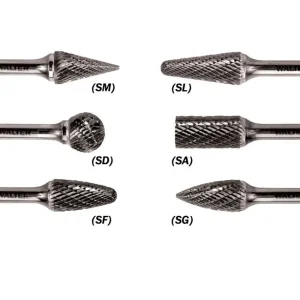
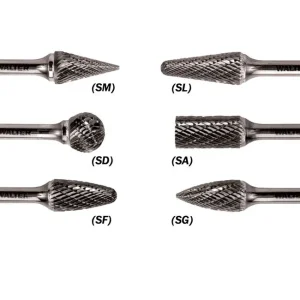
The flutes cut rather than grind, which gives control over material removal and leaves a smoother surface than a grinding wheel at the same stock removal.
Cut type is the first specification. Single cut has one flute direction and produces longer chips — it cuts faster and is used on steel, cast iron and harder materials. Double cut (cross cut) has two flute directions and produces smaller chips — it is smoother, easier to control and better on thin sections and softer materials. Aluminium cut (non-ferrous) has a coarse, wide flute that prevents the soft metal from clogging.
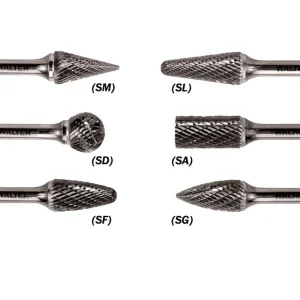
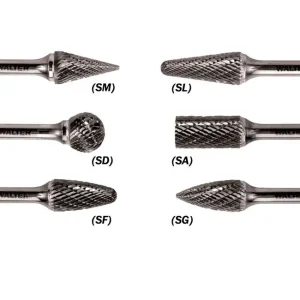
Head shape follows the geometry of the work: cylindrical (SA) for flat surfaces and edges, ball (SD) for concave shapes and hole deburring, oval (SE) for curved surfaces, tree (SF) for tight radii and holes, cone (SM) for countersinks and angled edges, and inverted cone (SN) for back-side deburring.
Shank diameter sets the tool: 1/4 in is the standard for die grinders, 1/8 in for pencil grinders and light work, 6 mm for European tooling. Speeds are high — carbide burrs run at 15,000-35,000 RPM depending on head size — and the tool must be rated for the burr.